
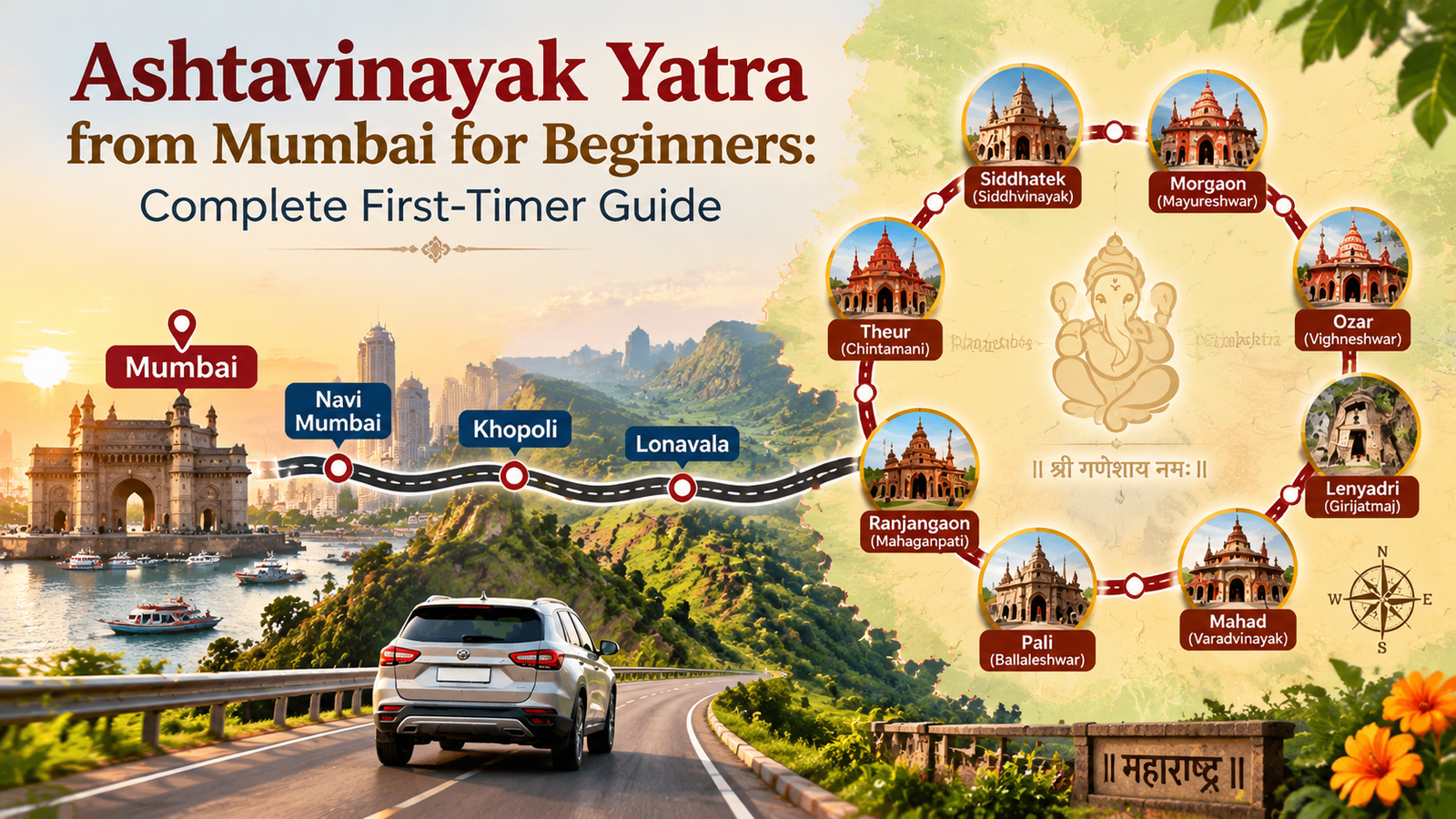
The eight Ashtavinayak temples are located across different parts of Maharashtra state. The circuit covers Morgaon, Siddhatek, Pali, Mahad, Theur, Lenyadri, Ozar, and Ranjangaon. Since they are in different districts, you need substantial road travel between individual temples.
The geographical spread is wide; therefore, you need careful planning. It becomes more necessary if you are following the traditional sequence.
Distances between temples can vary considerably, and actual driving time depends on many external aspects like traffic, road conditions, weather, and stops along the way.
If you have a tightly scheduled itinerary of two days, then you may need to depart early. Also, you will have limited time for rest.
If you have a three-day plan, then it provides greater flexibility. Pilgrims travelling with children, elderly family members, or larger groups should consider these practical factors before choosing their itinerary.
Understanding the circuit’s geography helps set realistic expectations and makes it easier to plan transport, overnight stays, meals, and sufficient time for darshan at every temple.
Guesswork Ruins the First Trip
Planning an Ashtavinayak Yatra without checking the practical details may turn your spiritual journey into a stressful road trip.
Almost all temples are close by; therefore, darshan will not take much time. Hotels and vehicles are always available and can create avoidable delays. Road conditions, traffic, temple timings, meal breaks, and accommodation arrangements affect the day’s schedule.
The traditional sequence, or the Shastrokta Ashtavinayak Yatra, may not be suitable for everyone. This is because this yatra involves changing the route.
A realistic itinerary should allow sufficient time at each temple rather than treating eight darshans as a checklist.
Booking accommodation and transport in advance is particularly useful during weekends, festivals, and peak pilgrimage periods.
It is mandatory to verify the route, temple timings, overnight stops, and package inclusions before planning.
Your Beginner-Friendly Route and Itinerary from Mumbai
The Traditional Temple Order, Explained Simply
The traditional Ashtavinayak Yatra is visiting the temples in a prescribed sequence. The pilgrimage begins at Mayureshwar in Morgaon, which is the starting point, and then proceeds to Siddhivinayak at Siddhatek. The third temple is Ballaleshwar at Pali, followed by Varadvinayak at Mahad. Pilgrims then continue to Chintamani at Theur, Girijatmaj at Lenyadri, and Vighneshwar at Ozar. The last temple in the sequence is Mahaganapati at Ranjangaon.
The Shastrokta Yatra does not finish at the eighth temple. You are supposed to visit Morgaon again at the end. It completes the cycle. Devotees who follow the Shastrokta Ashtavinayak Yatra consider it very special and sacred.
Most tourists adjust the route as per convenience. But some people consider the Shastrokta Yatra very important. You need to change the driving route and sequence.
Better planning makes the journey easier without losing its traditional structure.
How to Travel: Car, Bus, or Tour Package
Choosing the right transport will make an Ashtavinayak Yatra from Mumbai considerably easy. A private car offers greater flexibility, allowing you to follow the traditional temple order. You can choose departure times, stop for meals, and breaks whenever required. It is particularly suitable for families and groups travelling together.
Bus travel is economical if there are many members in the group. But the schedule for this journey is fixed. Some people may find it hard to cope up with other members in the group. Also, unexpected delays can make it troublesome.
An organized Ashtavinayak tour package offers greater convenience by combining transport, accommodation, and itinerary planning in a systematic way. Some packages may also include meals or other services, so check the inclusions carefully before booking.
Compare the complete cost rather than the headline price. Check whether fuel, tolls, parking, driver charges, accommodation, meals, taxes, and cancellation conditions are included or not.
Best Season and How Many Days You Need
For Ashtavinayak Yatra, the best season is from October to February. It is because weather is cool and comfortable for long road journeys and temple visits.
During the monsoon, the countryside becomes very scenic, but heavy rain may affect driving conditions and travel times.
Also, there are many festivals during this time. So, you can experience larger crowds. Therefore, you should choose other months if you prefer quieter darshan.The number of days depends on your pace and stamina to travel. A 2-day yatra is for pilgrims who can have early starts, can drive longer, and can adhere to a tightly planned schedule.
A 3-day itinerary is better for first-time visitors, families, and senior pilgrims. It provides more time for darshan, meals, rest, and unexpected delays. When planning from Mumbai, consider the time required for both the temple circuit and the return journey rather than counting only temple visits.
Costs, Stays, and Picking a Tour Operator
The cost of an Ashtavinayak Yatra depends on the number of days, vehicle type, accommodation category, group size, meals, and services included. You should know about the complete price breakdown before booking. Do not rely on the advertised package rate. For overnight stays, you should choose hotels based on your route and the next morning’s departure. Do not select accommodation by rating or price only. Families and senior pilgrims need comfortable rooms, convenient parking, and adequate rest time.
When you plan an Ashtavinayak tour, you should check the itinerary, vehicle condition, hotel details, cancellation policy, customer reviews, and inclusions. Most importantly, you should confirm that the operator understands your preferred order of temple darshan. A transparent package with realistic travel times is preferable to a cheaper itinerary that leaves little room for delays or rest.
Your First Darshan Starts with One Simple Decision
Your first Ashtavinayak Darshan becomes easy when you decide how you want to experience the pilgrimage before booking anything else. If your priority is completing the traditional temple circuit within limited time, then a well-planned 2-day itinerary may suit you. If you are travelling with family, senior members, or you need a slow pace, then you should choose three days for darshan, meals, rest, and unexpected road delays.
